The short version
Dholera has no verified price list, so this is not a cheapest-areas ranking. We map the location categories usually positioned at the entry end, peripheral villages, highway-corridor pockets, early-phase schemes, boundary-adjacent land and unconverted agricultural land, and the trade-off each carries. Lower positioning almost always reflects distance from infrastructure, timeline risk or a title question, which is exactly what you must verify before paying.
Budget areas is a fair question with a careful answer, because Dholera has no verified price list and we will not invent one. What we can map are the location categories usually positioned at the entry end of the market, and the trade-offs each one carries. The theme throughout is simple: lower positioning almost always reflects something, distance from infrastructure, an unfinished timeline, or a title question, and that something is exactly what you must check.
The honest position on Dholera plot prices
There is no official government per-unit market price for Dholera plots. The state publishes a land-pricing policy and a base allotment framework at dholera.gujarat.gov.in/land_pricing, not a live market rate, so any specific rupee-per-unit figure you see is a broker or portal listing, not a verified or official number, and it moves a lot by location and time. As an indicative, broker-sourced and unverified range for 2026, aggregator listings quote residential plots at roughly Rs 6,000 to 12,000 per square yard, which is about Rs 650 to 1,350 per sq ft, varying with the TP scheme, road width and nearness to the Activation Area, expressway and airport. Treat that only as a rough range to sanity-check a quote, never as the price. To get a real number, ask the developer for the full all-in price and payment schedule in writing, compare a few RERA-registered projects rather than roadside agricultural land marketed as being "in the SIR", and factor add-ons of about 4.9 percent stamp duty plus 1 percent registration in Gujarat. We never guarantee appreciation, because no government source does. Sources: fact pack price-and-land value notes, MagicBricks and 99acres listings (indicative only).
Entry-positioned Dholera areas and their trade-offs
Peripheral SIR villages
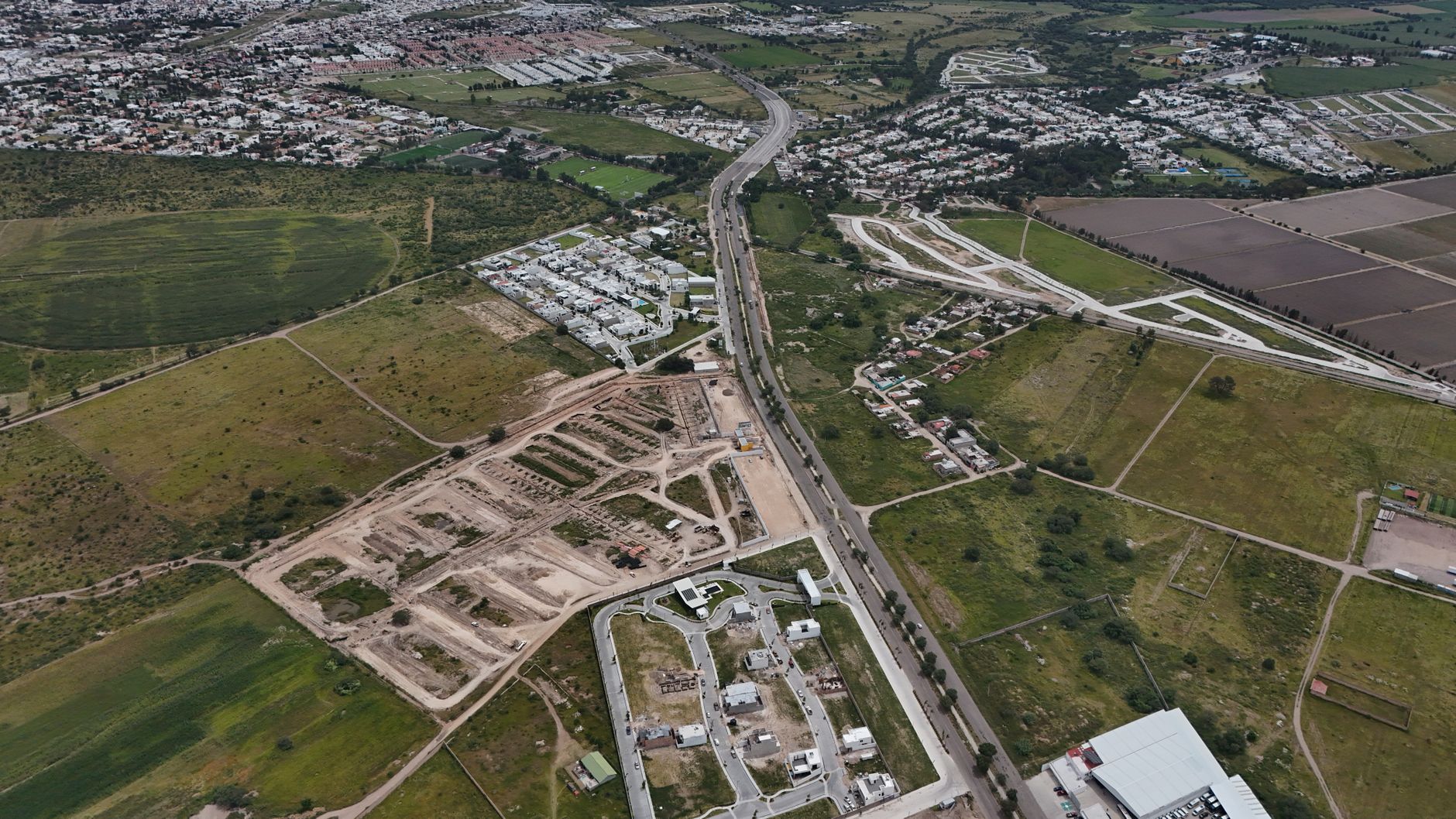
Village pockets further from the Activation Area, such as those around Pipli, Fedara and the outer survey numbers, are usually positioned at the entry end of the market. That is a location observation, not a price.
Further out often means less nearby trunk infrastructure and a longer horizon, so weigh the lower positioning against slower servicing.
Highway-facing corridor pockets
Plots along the Pipli to Bhavnagar and Fedra state-highway routes, and near junctions, are corridor rather than core, and are typically positioned as more accessible entry points.
Highway frontage can suit commercial use later, so check zoning if that is your plan.
Early-phase and announced schemes
Schemes marketed as announced or early-phase, further from serviced zones, are commonly positioned as entry-level. Announced status is not delivery, so the trade-off is price positioning versus timeline risk.
Confirm what infrastructure actually exists on the ground today rather than what the masterplan promises.
Land near the SIR boundary
Plots described as near the SIR boundary or at zero kilometres from it sit at the edge of the notified area. The critical check is whether the specific plot is genuinely inside the SIR and N.A., or just adjacent.
Boundary-adjacent land marketed as in the SIR without N.A. status is a documented red flag, so verify the notification.
Agricultural land marketed for conversion
The cheapest positioning of all is raw agricultural land, but it is legally not buildable until converted to N.A. Land inside a sanctioned TP scheme is treated as N.A., land outside is not.
This is the highest-risk budget category, so treat any agri plot marketed as in the SIR with real caution and full document checks.
The documented red flags to walk away from
Most Dholera trouble comes from a short, well-documented list of red flags, none of which we invented. First, agricultural land marketed as being "in the SIR" without N.A. conversion or a Final Plot allotment. Second, plots far outside the Activation Area sold as if they carry Activation Area infrastructure and timelines. Third, unregistered or non-RERA projects, or a vague "RERA approved" claim with no registration number you can check. Fourth, unclear or broken title, which is why the 30-year 7/12 chain and Encumbrance Certificate exist. Land acquisition here was genuinely litigated, with the Gujarat High Court staying SIR acquisition in 2015 after farmer petitions, so a clean, current title chain is not a formality. Add to that the marketing tells: guaranteed appreciation, assured returns and 10X promises, which no government source supports and which the fact pack flags as speculative marketing. The defence is boring and effective. Buy verified plots inside the SIR boundary with a real GUJRERA number, clear N.A. title and a written all-in price, and you keep the upside without the traps. Source: fact pack red-flag and myth notes, Gujarat High Court 2015 stay, Business Standard 2017.
Stamp duty, registration and the paperwork that makes a plot legal
In Gujarat, effective stamp duty is about 4.9 percent, made up of 3.5 percent basic plus a 1.4 percent surcharge, and registration is about 1 percent. A registration-fee waiver for property held in a woman's sole name is documented, while a separate stamp-duty concession claim is not reliably corroborated, so confirm it before relying on it. N.A. status matters too: agricultural land must be converted to Non-Agricultural before legal construction, and land inside a sanctioned Town Planning scheme is treated as N.A. by Gujarat rule. On measurement, 1 acre equals 4,840 sq yards or 43,560 sq ft, and 1 sq yard equals 9 sq ft. A bigha in Gujarat is commonly around 2,500 sq yards, roughly half an acre, but the bigha is not standardised and varies by region, so always confirm locally. The title checklist is standard and non-negotiable: verify the sale deed and mother deed, a 30-year Encumbrance Certificate, the 7/12 extract and tax receipts, then execute the deed, pay the duty, complete biometrics at the sub-registrar (Dhandhuka for most SIR land) and obtain the Khata. Source: fact pack investment and land mechanics.
Who runs Dholera and why the structure matters
Three bodies matter. DSIRDA, the Dholera Special Investment Region Development Authority, is the statutory planning and land authority. DICDL, Dholera Industrial City Development Ltd, is the special purpose vehicle that actually builds the city, formed on 28 January 2016 and owned 51 percent by Gujarat through DSIRDA and 49 percent by the Centre through the NICDC Trust. NICDC, the National Industrial Corridor Development Corporation, formerly DMICDC, is the central nodal agency, and it markets Dholera as India's First Semicon City. Around them sit the Gujarat industrial ecosystem: GIDB for infrastructure, iNDEXTb for investor facilitation, GIDC for industrial estates, and the Industries Commissionerate for policy. This governance stack is not trivia. The 51-49 ownership is precisely why Dholera has survived collapsed deals, litigation and missed deadlines that would have killed a purely private project, because both a determined state government and the central government have their credibility tied to it. When you assess any Dholera claim, the first useful question is which of these bodies is the primary source. Sources: dholera.gujarat.gov.in, nicdc.in, gidb.gujarat.gov.in.
The dated milestones that show momentum
Momentum is easiest to judge from dated, sourced wins rather than adjectives. The Gujarat SIR Act was enacted in 2009, the legal foundation. DICDL, the build SPV with dual-government ownership, was formed on 28 January 2016. The Union Cabinet approved the Tata to PSMC fab at Rs 91,000 cr on 29 February 2024 under the India Semiconductor Mission. In August 2024 the Cabinet approved 12 new industrial cities under the National Industrial Corridor programme, reaffirming Dholera as the flagship node. The Fiscal Support Agreement for the fab was signed on 5 March 2025. The Ahmedabad to Dholera Expressway was reported inaugurated on 31 March 2026. The CCEA cleared the semi-high-speed rail around 13 May 2026, and the Tata to ASML lithography MoU was reported around 17 May 2026. By mid 2026 the airport was reported roughly 80 percent complete with operations targeted for late 2026, fab civil work around 50 percent, and about 300 MW of solar commissioned. Each of these is real and dated, and together they answer the "nothing is happening" claim. Source: fact pack momentum and milestones notes, PIB.
What is Dholera SIR, in one honest paragraph
Dholera SIR is the Dholera Special Investment Region, a greenfield industrial smart city taking shape in Ahmedabad district, Gujarat, about 100 km south-west of Ahmedabad. It is built under the Gujarat Special Investment Region Act of 2009 and is the flagship node of the Delhi Mumbai Industrial Corridor. The planning envelope is roughly 920 sq km, of which about 580 sq km is developable and around 422 sq km is set for urban development, phased across roughly three decades. The first live piece is the Activation Area of about 22.5 sq km inside Town Planning Scheme 2, the plug-and-play demonstration zone where trunk infrastructure was laid before anything went up above ground. Planning sits with DSIRDA, the statutory land and planning authority. The city itself is built by DICDL, a special purpose vehicle formed on 28 January 2016 and owned 51 percent by Gujarat and 49 percent by the Centre through the NICDC Trust. That dual-government structure is the single most important thing to understand about Dholera, because it is why the project keeps moving even when individual timelines slip. Sources: DSIRDA and DICDL (dholera.gujarat.gov.in), NICDC (nicdc.in).
Frequently asked questions
What is the plot price in Dholera?
There is no official government market price per plot. Broker listings in 2026 indicatively quote residential plots at roughly Rs 6,000 to 12,000 per square yard, which is unverified and varies widely by location, TP scheme and proximity to the Activation Area, expressway and airport. Always get the full all-in price in writing for the specific plot and add about 4.9 percent stamp duty plus 1 percent registration.
What is N.A. status and why does it matter?
N.A. means Non-Agricultural. Agricultural land must be converted before legal construction, and land inside a sanctioned Town Planning scheme is treated as N.A. under Gujarat rule. Buying land marketed as being in the SIR without N.A. status or a Final Plot allotment is a documented red flag.
Is it safe to invest in Dholera SIR?
It can be, if you buy the right way. Dholera has genuine strengths: dual-government backing through DICDL (51 percent Gujarat, 49 percent Centre), a Rs 91,000 cr Tata semiconductor fab under construction, about 300 MW of operational solar and an open expressway. The safety comes from discipline: buy a RERA-registered plot verified inside the SIR boundary, confirm the GUJRERA number, N.A. title and 7/12 chain, and get the all-in price in writing. Treat appreciation as an expectation, never a guarantee.
How do I verify a Dholera RERA number?
Go to gujrera.gujarat.gov.in, open Registration and then Project Search, select district Ahmedabad and taluka Dhandhuka, enter the number or developer name, and check the sanctioned layout, promoter, FSI and expiry. Confirm your brochure plot numbers match. A vague RERA approved claim with no number is not a registration.
How far is Dholera from Ahmedabad?
Dholera SIR is about 100 km south-west of Ahmedabad. Via the 109 km Ahmedabad to Dholera Expressway, reported open since March 2026, travel time is roughly 40 minutes to an hour, with sources varying.
Sources
- Aggregator listings (MagicBricks, 99acres) for indicative, unverified 2026 price ranges only
- DSIRDA and DICDL, official Dholera portal, dholera.gujarat.gov.in
- GUJRERA, Gujarat Real Estate Regulatory Authority, gujrera.gujarat.gov.in
Every Dholera figure above is labelled durable, reported with a date, or target, and traces to the named sources. Ratings are point-in-time Google figures. We do not sell plots or take payment to change a ranking.
Last verified: July 2026Get the 2026 Dholera Rankings Report
The verified builders, the projects to watch and the areas moving fastest, in one free PDF. We never sell plots and never take payment to change a rank. Unsubscribe anytime.